The most established French language school in South-West France!

 Télécharger la brochure
Choisissez votre programme
Français général
Cours combinés
Français de spécialité
Diplômes et examens
Professeurs
Etudiez le français en France avec BLS !
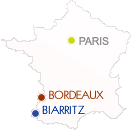
Conscients de vos attentes pour des cours de français qui répondent à vos objectifs, nous vous proposons deux écoles de français ainsi que deux destinations de qualité :Bordeauxet Biarritz - qui illustrent parfaitement la beauté et le caractère de l'une des plus belles régions de France, Aquitaine.
Nouveautés...
Nouveauté : Visite privée du Château La Confession à Saint-Emilion
Prenez la route du vin, de Bordeaux à Saint-Emilion! Une excursion conviviale et culturelle pour les... >>
Plaisir
- Cinéma : toutes les semaines, venez découvrir notre sélection de films français que vous... >>
Etre étudiant à BLS, c'est aussi...
- Des tandems linguistiques , afin de rencontrer de nouvelles personnes et d'améliorer votre français en... >>
Programme JUNIORS et GROUPES scolaires

Décrouvrez notre programme JUNIORS.
Pour un devis pour un groupe :